For many years, infrastructure has been assessed primarily by what it does. Roads enable the movement of people and goods; water infrastructure manages and protects water resources; railway lines connect regions; and energy networks ensure reliable supply. The underlying logic was straightforward: build an asset capable of performing its intended function safely, efficiently, and over the long term.
Today, however, that way of thinking is no longer sufficient. Not because roads have stopped carrying vehicles or water networks have ceased distributing water, but because our expectations of infrastructure have evolved dramatically over the past two decades. We now expect infrastructure to help us manage resources more effectively, anticipate incidents, provide real-time insights, and support increasingly complex decision-making. In other words, we no longer expect infrastructure simply to function. We expect it to help us understand what is happening around it. This seemingly subtle shift is transforming the way public assets are designed, operated, and managed.
Every time we travel on a motorway, pass through a tunnel, or use an urban service, we interact with infrastructure that generates vast amounts of information. Data comes from sensors, control systems, field devices, cameras, weather stations, and operational platforms. Yet the real transformation lies not in the existence of this data, but in our ability to connect it, interpret it, and turn it into actionable knowledge.

For years, infrastructure digitalization was largely about adding technology: more equipment, more communications, more systems. Today, the conversation has changed. The question is no longer how much data we can collect, but how we can use it to manage assets that are becoming increasingly complex and interconnected. And that complexity continues to grow.
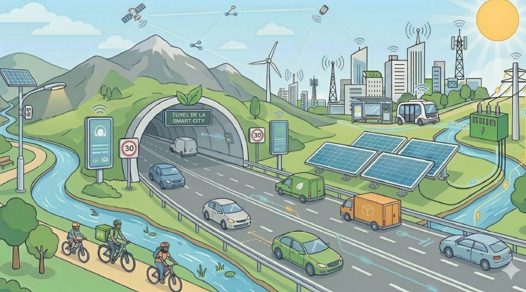
The boundaries that traditionally separated one type of infrastructure from another are becoming increasingly blurred. Mobility depends on energy. Weather events affect the operation of roads, ports, water networks, and urban infrastructure. Traveller and user information systems influence demand. The management of any individual asset increasingly requires an understanding of factors that often lie beyond its own physical boundaries. As a result, managing infrastructure in isolated silos is becoming less effective. What creates value is the ability to integrate information from multiple systems and build a more comprehensive view of operational reality. This is where the concept of infrastructure as a platform begins to take shape.
When we talk about a platform, we are not referring solely to a technological solution. We are talking about infrastructure designed to evolve, capable of incorporating new capabilities and connecting information that was originally created for different purposes. Infrastructure that can adapt without requiring reinvention every few years.
This issue becomes particularly significant when we consider that public assets are typically designed to remain in service for several decades. Few, if any, organizations can accurately predict today every technological requirement that may emerge twenty or thirty years from now. What is possible, however, is to build infrastructure that is ready to integrate those capabilities when they arrive. This adaptability is becoming just as important as the physical characteristics of the infrastructure itself.
A robust, well-designed asset delivers limited value if it cannot evolve at the same pace as technology, operational requirements, and user expectations. Perhaps this is why concepts such as open architectures, systems integration, and data governance have moved beyond the realm of technical discussions to become strategic priorities. They are not passing trends. They are fundamental factors that will determine whether infrastructure remains useful, relevant, and effective throughout its lifecycle.
The reality is that we will continue building roads, water networks, railway systems, and energy infrastructure. Physical assets will remain at the core of public services. Yet it will become increasingly difficult to separate these assets from the information they generate and the systems that connect them to their wider environment. At its heart, the transformation taking place across the sector is about far more than digitalization alone. It reflects a new way of understanding what infrastructure is and the role it plays in an increasingly connected society.
Everything suggests that, in the years ahead, the most valuable infrastructures will not necessarily be those that generate the greatest volume of data, but those that can use that data most effectively to adapt, evolve, and respond to challenges that have yet to emerge.