
Choose language
Search
  • Homepage
    HomepageHomepageHomepageHomepageHomepage
  • Timeline
    TimelineTimelineTimelineTimelineTimeline

Since the 1920s

The advertising from that period shows, with interesting examples, SICE's first activities. These images show the company's diversification in products and services and the first projects that shaped its history.

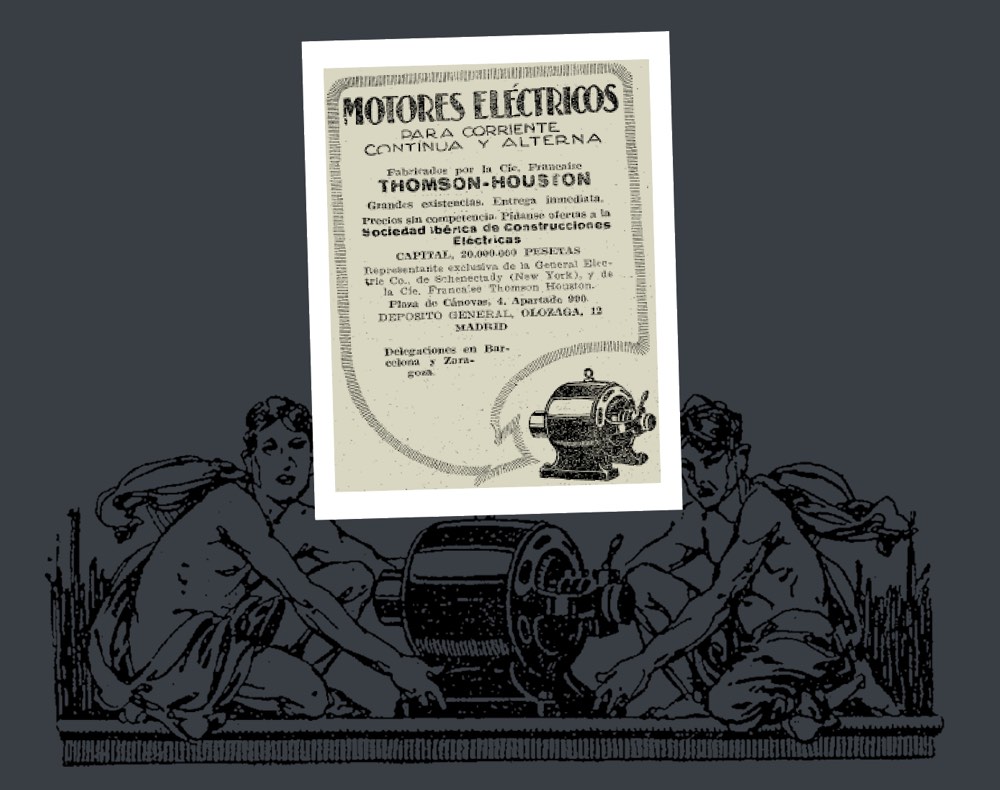
In its beginnings, SICE exclusively marketed electric motors in Spain manufactured by its parent companies General Electric and Thomson-Houston.
The small consumer

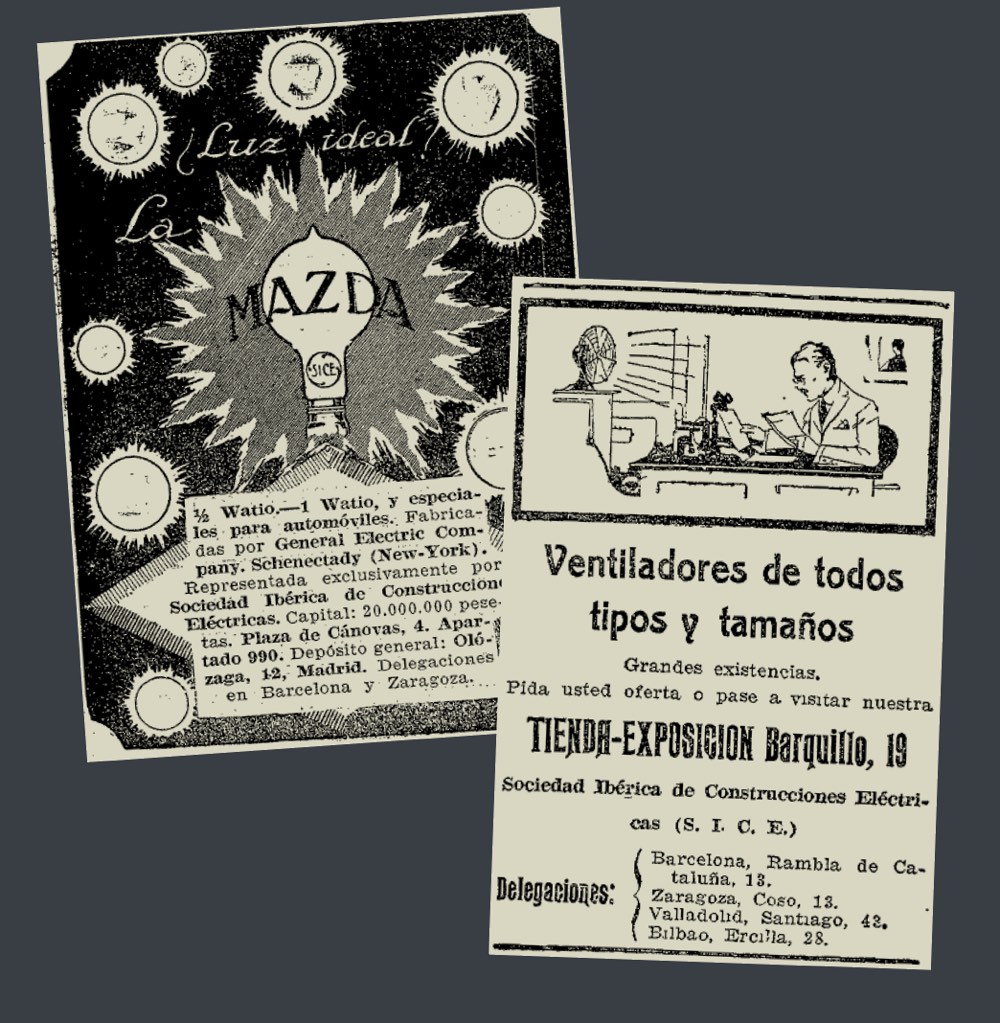
A few years later, SICE reached an agreement with a lighting company MAZDA, which led to the distribution and sale of lighting.

During those early years, the product line was focused on the small consumer. Light bulbs for domestic and industrial use were marketed as well as fans, vacuum cleaners, or telephones. These objects, so commonplace today, where figures such as Edith Clarke, the first female electrical engineer in the United States and inventor of the so-called "Clarke calculator", who was linked throughout her career to General Electric, stood out.

Sponsorship

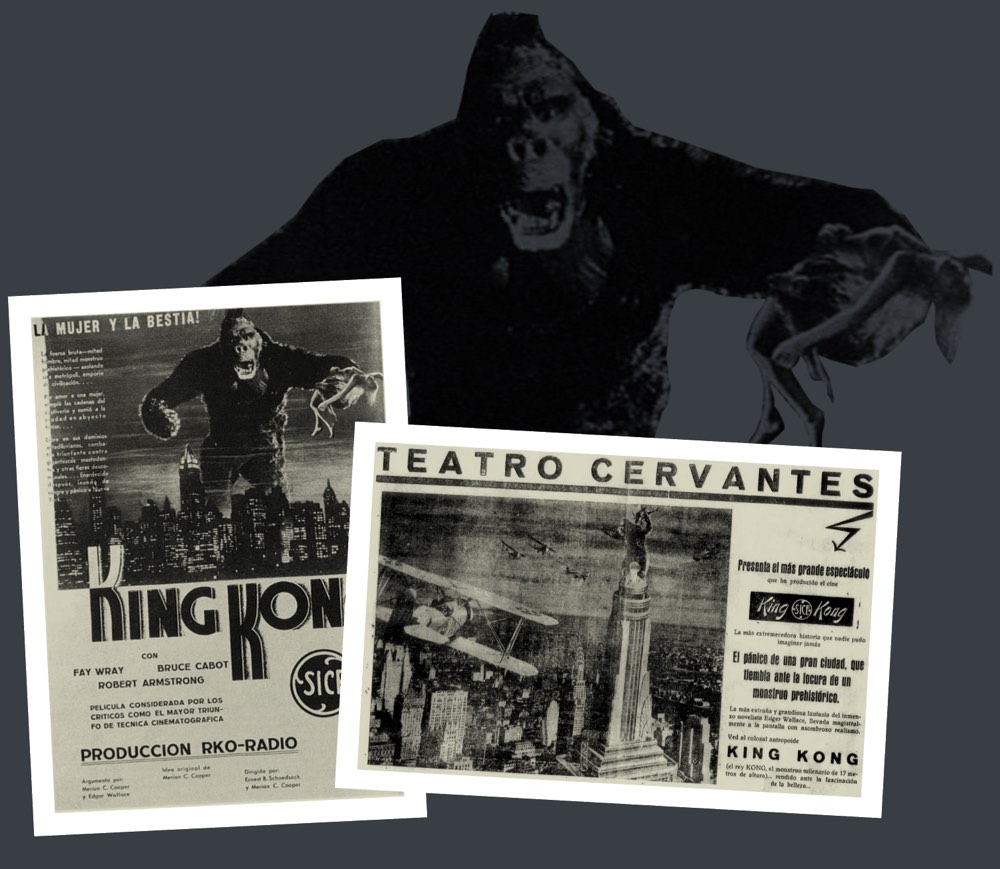
SICE also sponsored Hollywood films as popular as King Kong (by Merian C. Cooper and Ernest B. Schoedsack in Spain, 1933) as a distribution company for RKO production company.

The company combined these first media activities with electrical installations that promoted the country's modernisation, like electrifying railway lines, setting up hydroelectric plants or working in the agricultural sector for irrigation or lighting the countryside.

Radio

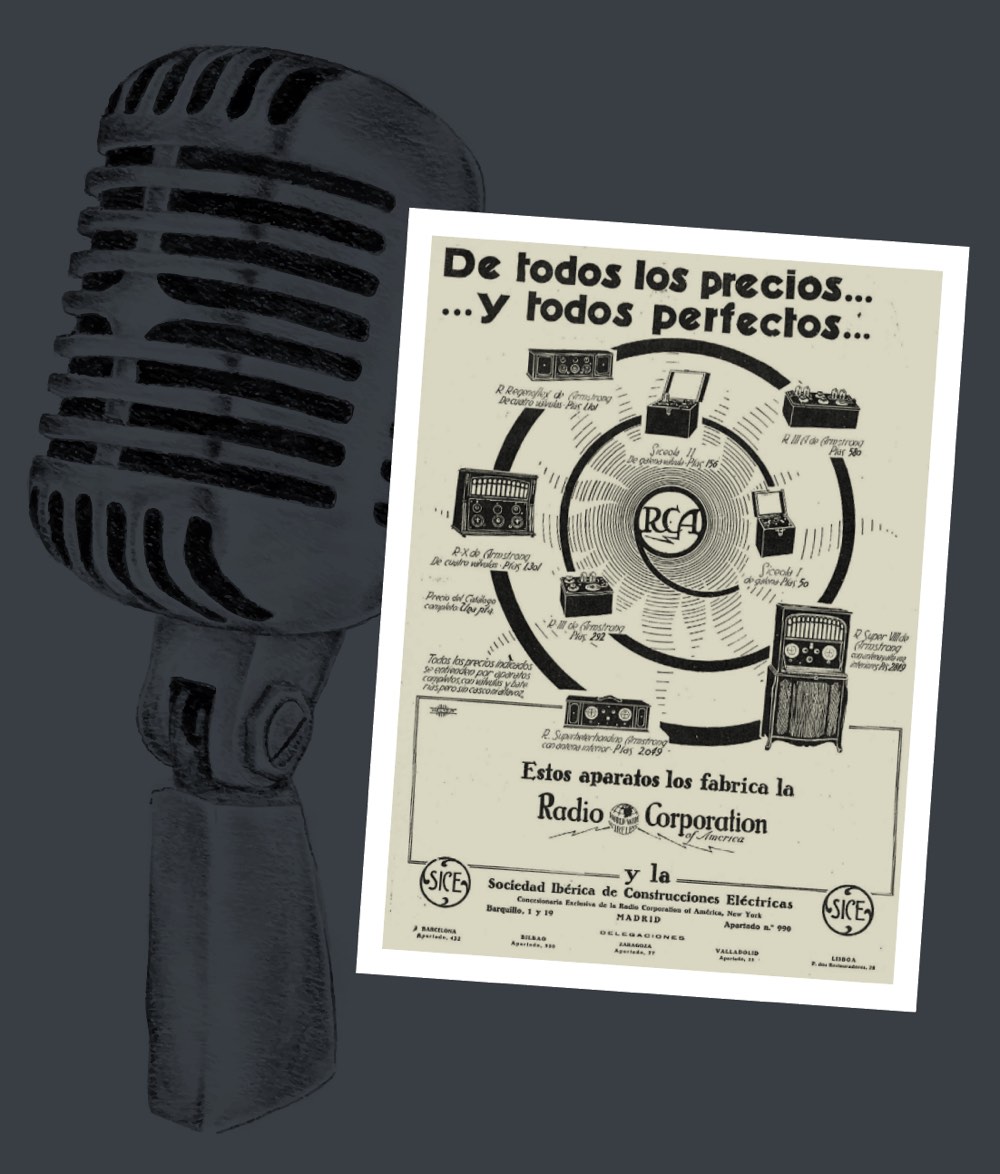
At a time when radio was the main means of communication and entertainment, SICE, distributor of radio equipment manufactured by RCA, brought the sound airwaves to thousands of homes throughout Spain.

Its involvement in the media was not limited to these products. SICE was one of the founding companies of Unión Radio, the radio station network that would later become the PRISA group.

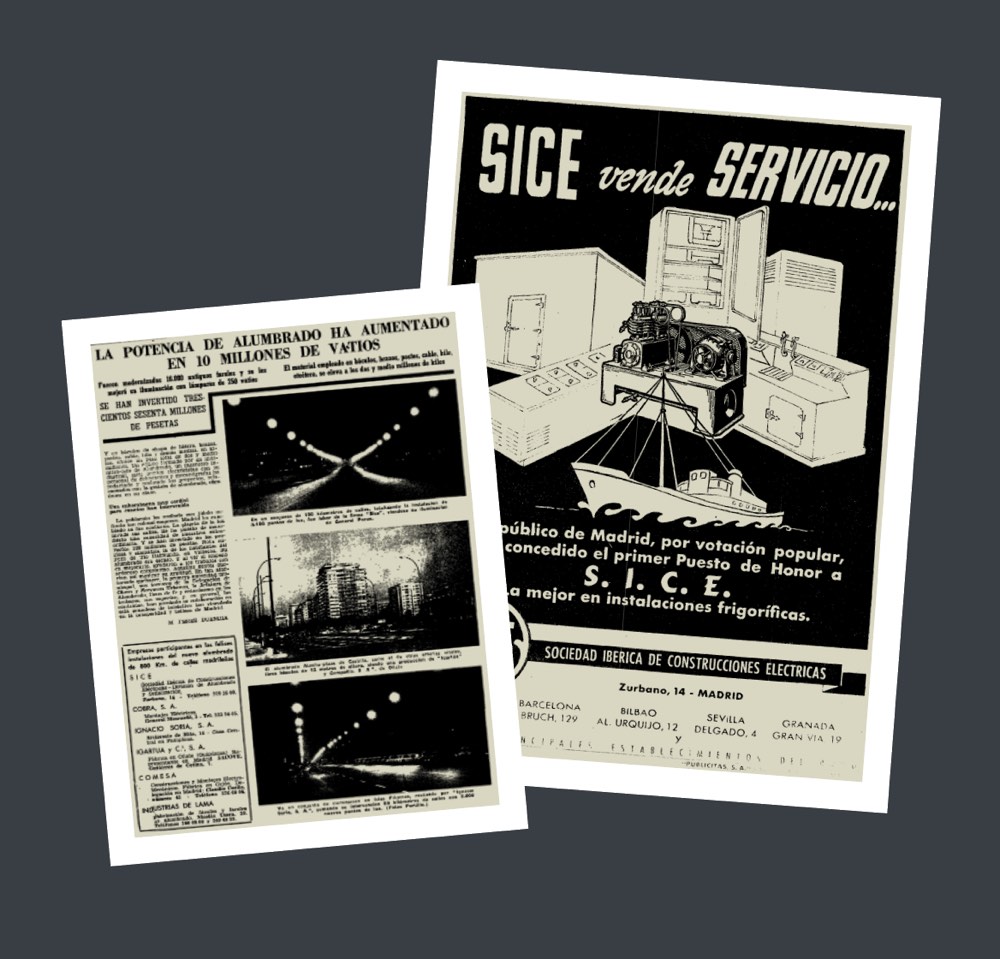
Vocation of service to citizens

Offering them solutions such as public lighting that began in those years and the direct sale to the consumer of white goods such as refrigerators or stoves.