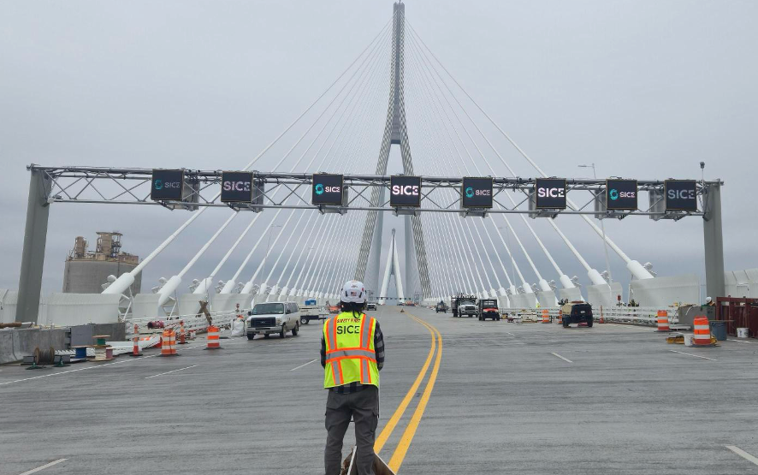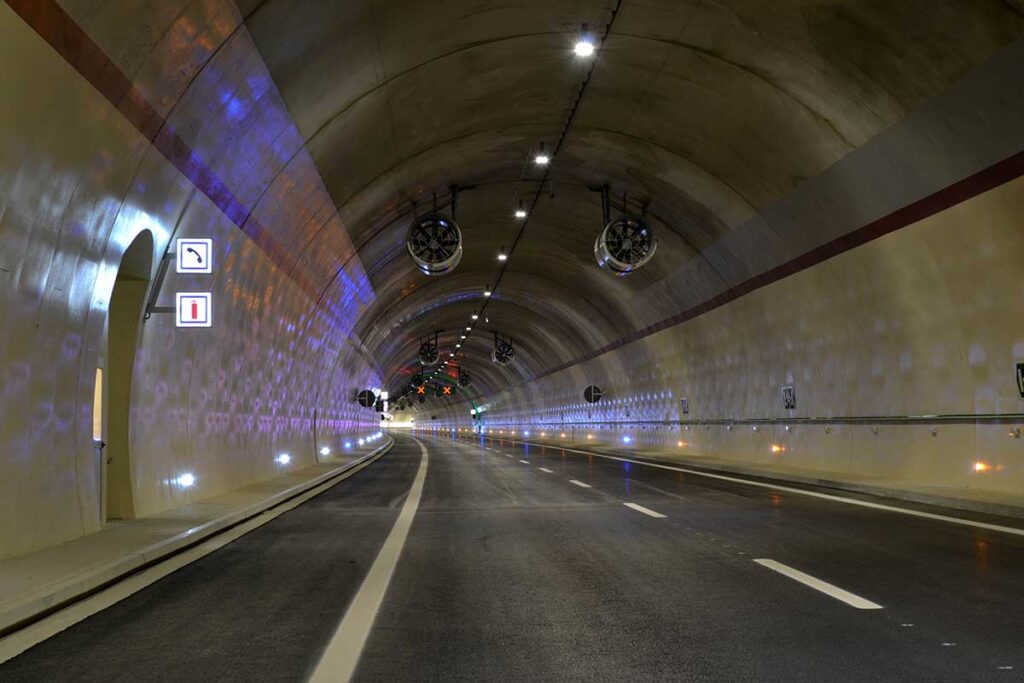
Bridges are no longer static structures. Over the past decade, they have evolved into dynamic corridors capable of measuring, interpreting, and responding to what happens on, beneath, and around them. This qualitative leap is not driven solely by civil engineering, but by the technological intelligence layer delivered by companies specialized in Intelligent Transportation Systems (ITS). Today, ITS solutions are no longer a supplementary feature—they have become the operational brain of any critical infrastructure.
A modern bridge operates as a living infrastructure. Through distributed sensors, it perceives its environment; through advanced analytics and SCADA platforms, it interprets events; it makes decisions and acts within milliseconds to maintain safety and traffic flow; and it learns from historical data to optimize future performance. The result is an infrastructure that anticipates risks, manages traffic intelligently, and coordinates mobility not only on the bridge deck itself, but also across access roads, ramps, and connected corridors.
Bridges are exposed to extreme weather conditions, constant traffic variability, increasing logistical loads, and incidents that demand immediate response. As a result, resilience no longer depends exclusively on structural engineering, but on the infrastructure’s ability to react autonomously. ITS systems enable incident detection within seconds, trigger automated responses such as lane restrictions, dynamic messaging, or detours, coordinate emergency services, and protect users from sudden events caused by wind, rain, fog, waves, or ice. This operational intelligence translates into a significant reduction in accidents and a substantial improvement in service continuity.
At the same time, data has become the new competitive frontier in bridge management. Data monetization and governance are fundamentally reshaping operations: traffic data optimizes operational performance, weather data feeds predictive models, structural data enables intelligent maintenance strategies, and multimodal data supports coordination with public transport and tolling systems. In this context, value lies not merely in deploying sensors, but in the ability to integrate, correlate, and exploit information in real time. Platforms such as SIDERA provide a decisive competitive advantage by delivering a comprehensive, unified view of the bridge and enabling interoperable, scalable, and centralized operations.

The New Generation of Smart Bridges: Managed, Connected, and Understood
As infrastructure evolves toward intelligent systems capable of adapting, learning, and responding in real time, the advanced management of major bridges increasingly relies on specialized technological solutions. This approach allows structures to move beyond passive functionality and become active assets that integrate safety, sustainability, and operational efficiency.
SICE, one of the leading technological players in the advanced management and operation of large bridges, delivers the technology layer that enables this transformation. By combining ITS technologies, communications systems, and advanced sensing within a unified architecture for continuous control and supervision, this ecosystem allows complex infrastructures to be operated with high levels of precision, reliability, and availability.
Within this model, control platforms such as SIDERA play a central role by consolidating operations and providing a holistic view of the bridge’s status. These intelligent systems bring together safety, sustainability, and operational efficiency through continuous coordination and supervision. With SIDERA, bridges monitor their environment, support operational decision‑making, and respond in real time to incidents, ensuring service continuity even under adverse conditions.
The deployment of this technology across some of the most significant bridges in North America and Europe reflects a clear trend: the mobility of the future is built on connected, resilient, and data‑driven infrastructures, where technology acts as a silent yet decisive enabler.

Constitution of 1812 Bridge (Cádiz, Spain). The First Major Bridge Project in SICE’s History
The construction of the Constitution of 1812 Bridge over the Bay of Cádiz coincided with a period of full technological maturity for SICE, which at the time had accumulated more than eight decades of experience in developing and deploying solutions for critical infrastructure. This project marked the first major bridge in which the company participated, initiating a line of work that would later be consolidated across numerous high‑complexity projects.
Within this context, SICE was responsible for implementing its SIDERA platform as the central traffic management system for the bridge, integrating supervision, operational control, and incident response within an infrastructure notable for its scale and demanding operating conditions. The solution ensured high levels of safety, efficiency, and service continuity, even under heavy traffic volumes and adverse environmental scenarios.
This first bridge project represented not only a milestone in the company’s trajectory, but also the foundation of a replicable technological model aimed at transforming major infrastructures into intelligent, resilient, and data‑driven systems.
Samuel De Champlain Bridge (Montreal, Canada) — A Fully Instrumented, SIDERA‑Driven Infrastructure
With a length of 3.4 kilometers and one of the highest traffic volumes in North America, the Samuel De Champlain Bridge in Montreal stands as a clear example of how technology can transform a critical infrastructure into an intelligent operational system.
SICE was responsible for the complete ITS engineering scope, including design, supply, integration, testing, commissioning, and initial maintenance. The deployment included variable message signs, CCTV cameras, lane control signals, weather monitoring systems, weigh‑in‑motion technology, and more than 35 kilometers of fiber‑optic network, forming a robust and highly available field architecture.
At the core of this instrumentation lies SIDERA, the supervision and control platform that integrates all bridge data—traffic, weather, equipment status, alarms, events, and performance indicators—within a single operational environment. SIDERA enables continuous monitoring, real‑time analysis, and automated execution of operational protocols, ensuring the bridge remains fully functional even under extreme weather conditions or peak demand scenarios typical of the Montreal metropolitan area.
Thanks to this technological integration, the Samuel De Champlain Bridge operates as a fully intelligent infrastructure, capable of anticipating incidents, coordinating responses, optimizing traffic flows, and safeguarding thousands of daily users with a level of operational precision unattainable without a platform like SIDERA.
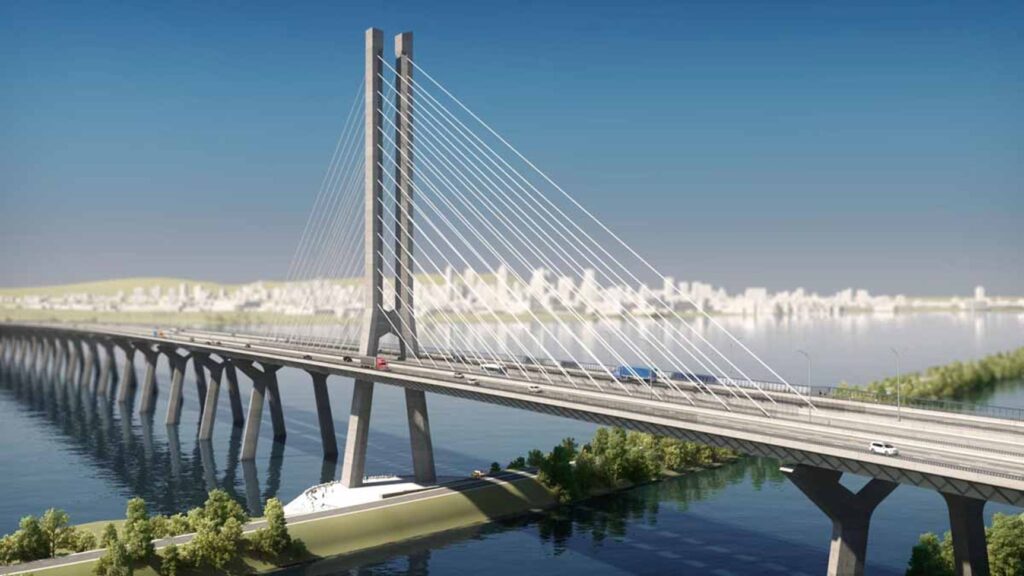
Gordie Howe International Bridge (Detroit, USA – Windsor, Canada): Technology, Borders, and Intelligent Mobility
The Gordie Howe International Bridge, connecting Windsor (Canada) and Detroit (United States), is the longest cable‑stayed bridge in North America and one of the most important new trade corridors between the two countries. It spans 2.5 kilometers and features six traffic lanes—three in each direction—along with a multimodal path for cyclists and pedestrians.
The primary challenge of this project was not simply constructing a monumental structure over the Detroit River. The real challenge lay in equipping the bridge with intelligence, operational foresight, and a digital architecture capable of ensuring mobility and safety at one of the busiest border crossings on the continent.
In this context, SICE assumed responsibility for the design and implementation of the bridge’s complete ITS system. This includes a network of sensors and monitoring systems to oversee traffic, detect and classify vehicles, and measure travel times in real time, along with variable message signs, V2I technologies, and automated response protocols to inform, anticipate, and act on any incident. A fiber‑optic backbone connects all subsystems, ensuring uninterrupted delivery of data, alarms, video, and events to the control center, while integration with border agencies CBSA and CBP enables optimized inspections, vehicle classification, and critical information sharing between both countries.

Hampton Roads Bridge–Tunnel Expansion (Virginia, USA): Technological Integration Across a Marine Estuary
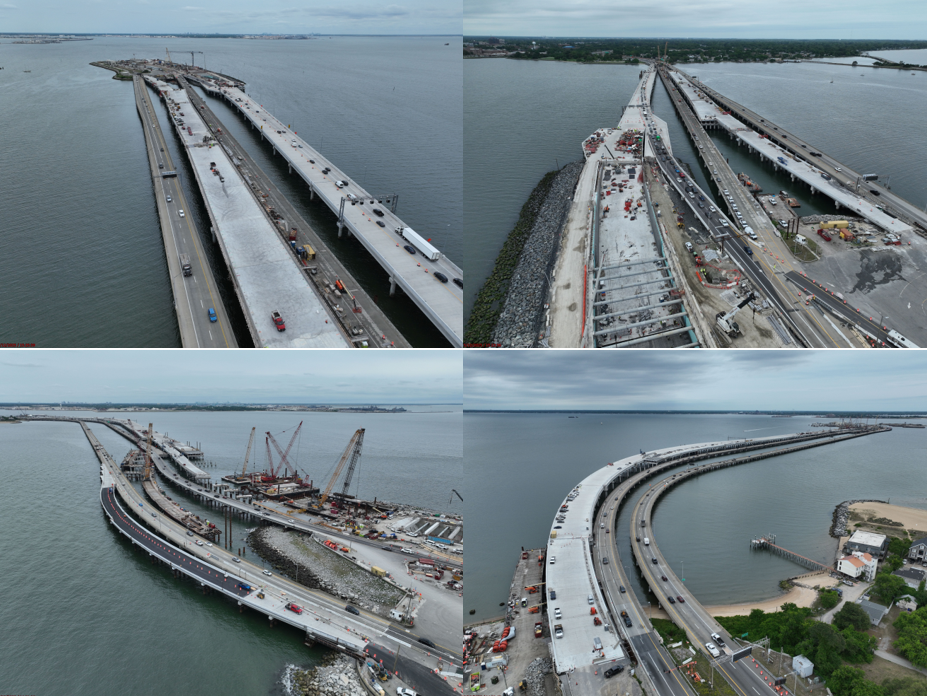
The expansion of the Hampton Roads Bridge–Tunnel (HRBT), in the state of Virginia (United States), takes place across the Hampton Roads estuary, a marine environment on the U.S. East Coast. The bridge‑tunnel system spans 5.6 kilometers and combines trestles, artificial islands, and immersed tunnels between the cities of Hampton and Norfolk. It is one of the most critical infrastructures along Interstate I‑64, serving more than 100,000 vehicles per day during peak periods.
Since 2020, the project has undergone expansion—the largest roadway project in Virginia’s history—with an investment of approximately USD 3.9 billion. The scope includes the construction of two new 2.4‑kilometer tunnels excavated using Mary, the second‑largest TBM in North America, along with new marine bridges, additional trestles, and the rehabilitation of existing structures. Together, these elements form an integrated system designed to increase capacity, enhance resilience, and reduce congestion in a key regional logistics hub.
Within this framework, SICE participates as the project’s technology integrator, responsible for deploying ITS systems both on land and across the new bridges, as well as implementing the fiber‑optic backbone connecting all subsystems to the new control center. This digital infrastructure is essential for supervision, operational management, and safety, enabling coordinated and efficient operation of the expanded bridge‑tunnel. Integrating technology alongside structural growth transforms the HRBT into a more robust, intelligent, and future‑ready marine‑terrestrial corridor.
Nichupté Bridge (Cancún, Mexico): ITS for Resilient Mobility in Critical Ecosystems
The Nichupté Bridge, located in Cancún (Mexico), is developed within the highly sensitive environment of the Nichupté Lagoon, where mobility must coexist with protected ecosystems and the extreme weather conditions typical of the Caribbean. In this context, the infrastructure must not only provide capacity and connectivity, but also operate under strict criteria of safety, resilience, and environmental sustainability.
In such environments, Intelligent Transportation Systems (ITS) play a decisive role. The deployment of technologies such as environmental monitoring, real‑time traffic control, integration with C4 centers, and high‑availability communications networks allows infrastructures like the Nichupté Bridge to operate under advanced standards of supervision, anticipation, and incident response.
Within this framework, SICE’s involvement focuses on the design and integration of ITS systems and the deployment of operational management platforms such as SIDERA, enabling coordinated management of mobility, climate, safety, and operations within a unified and technically robust architecture. This approach reflects the broader evolution of the sector toward infrastructures that operate as intelligent systems—capable of protecting both users and the natural environments in which they are embedded.